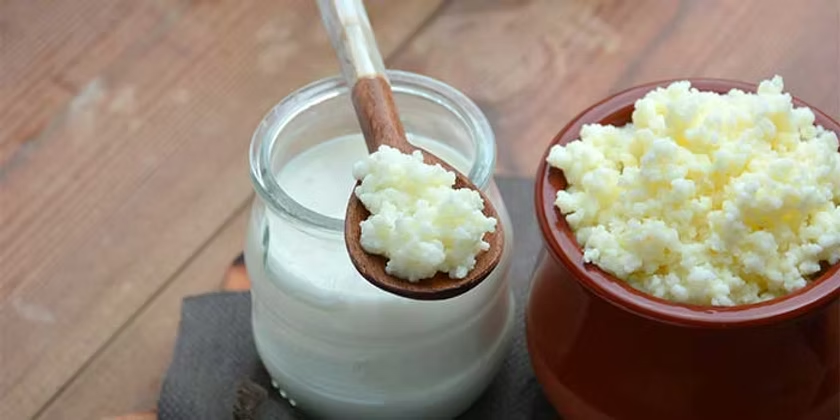
I’ve been getting questions about kefir making for a long time. Although I’ve mentioned it occasionally in my Instagram posts, I realized I’ve never explained it in detail in a full post. So, I wanted to explain it here in detail.
Kefir is a fantastic source of probiotics. If you’re wondering “What are these probiotics?”, you can read about it at this link.
* To make kefir, you first need to find a reliable starter culture. My starter culture is a special one I’ve been using for years. My Instagram friend “Denizi” gifted it to me. I still thank her every time I use it. Because it’s a Caucasian starter culture, it’s very difficult to grow. Therefore, I can’t distribute it much, unfortunately.
* You can get it from your friends or from the agricultural faculties of universities. There’s also the Kefir Danem brand in supermarkets; I haven’t tried it, but those who have are satisfied, although I’ve heard the taste is a bit strong. You can check online.
* I make my kefir with 1 liter of milk and finish it in 4-5 days. You can ferment it daily if you wish, but kefir undergoes a different fermentation process each day while in the refrigerator, so it’s beneficial to consume it within the first 4-5 days after fermentation.
* I add the starter culture to 1 liter of organic milk and, without closing the lid of the jar, loosely place it on top of the milk. I then put the jar in a dark kitchen cupboard. That’s how simple it is to ferment. It ferments in 24 hours in winter and 14-15 hours in very hot summers.
* After fermentation, I strain the kefir with a plastic strainer. I put the starter culture remaining in the strainer into a small jar filled with fresh milk. This starter culture in the small jar can stay in the refrigerator for 5-6 days. It feeds on the lactose in the milk until it’s fermented again and stays fresh.
* If you can’t ferment it for 15 days, you can put it in water and keep it in the refrigerator for up to 15 days. Any longer than that will kill the starter culture due to lack of nutrients. Therefore, you need to re-ferment it before 15 days have passed.
The starter culture goes dormant in water. To revive it, let it sit in a small amount of milk for 24 hours before starting the main fermentation process. During these first 24 hours, the starter culture will be nourished and revived.
* Absolutely do not let metal or tap water touch the starter culture. Always use wooden or glass spoons for the process, and only use plastic as a strainer.
* I also make cheese by making extra kefir. You can find the recipe here.
You can add fruits and make a kefir shake. You can also drink it plain. After I started consuming kefir, most of my bowel problems were solved. I explained it at length here, but believe me, making and straining it only takes 30 seconds 🙂 I hope you also benefit from this healing. I wish everyone many probiotic-rich days 🙂
#kefircheese #probiotics