
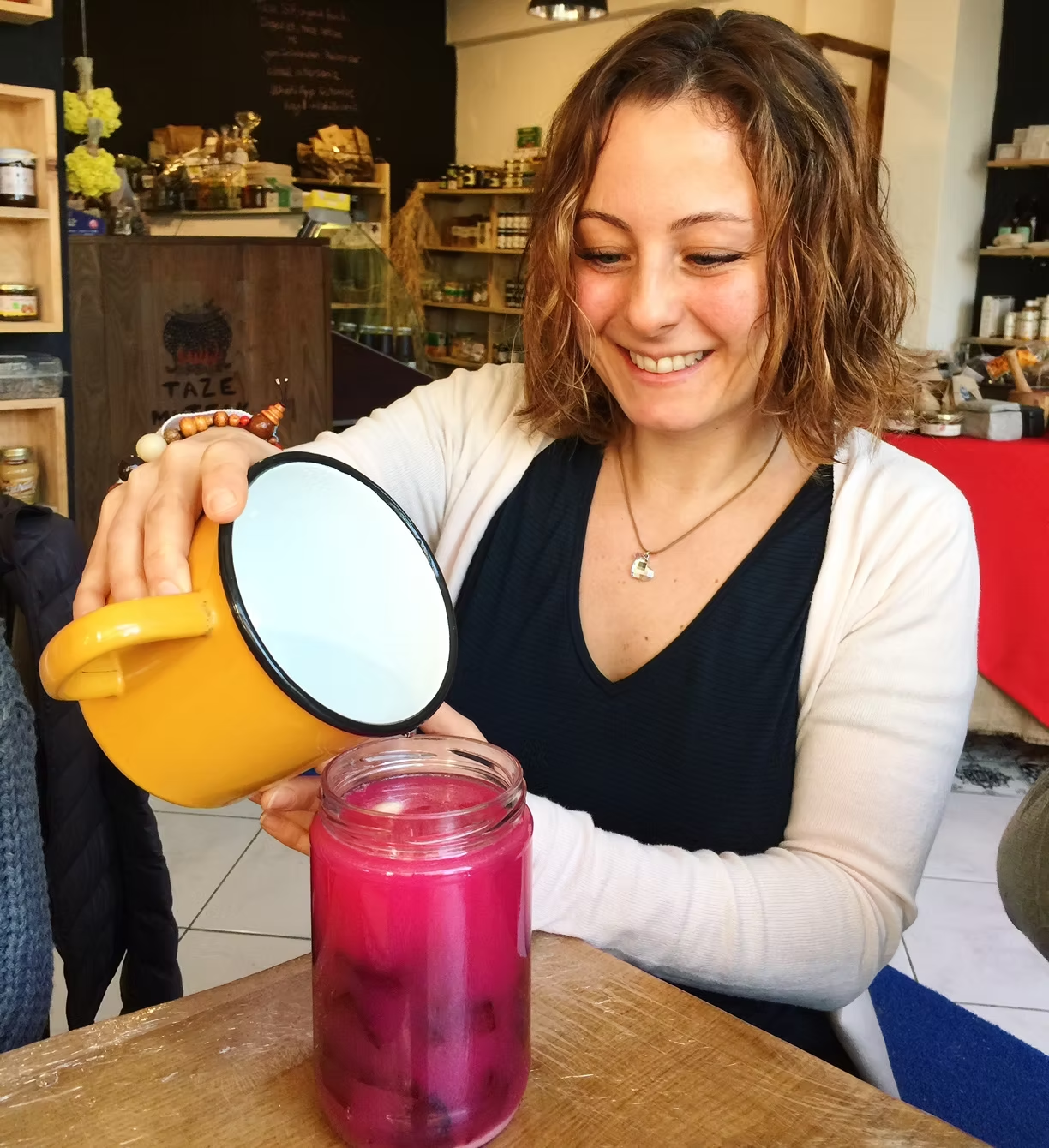
Yesterday, I attended a workshop on fermenting vegetables using the lacto-fermentation method, which I thoroughly enjoyed. Before sharing this wonderful method with you, let’s look at why we need to ferment vegetables.
In our intestines, we have tiny friends that maintain our body’s balance, breaking down everything we eat and their enzymes, and delivering them to the right places according to their importance. These are called good bacteria, or probiotics. Probiotics build a wall in our intestines, protecting us from all kinds of bad bacteria and fighting them. We are born with many probiotics from our mothers, but over time we destroy them by consuming antibiotics, processed foods, and sugar, allowing harmful bacteria to feed and grow. While there are many ways to obtain good probiotics in our traditional diet, in modern life, everything is now mass-produced, so we can’t replace the probiotics we lose.
What happens when probiotics decrease in our bodies?
Bloating and gas problems that we always complain about
Chronic fatigue
Allergies
Depression
Acne problems
Weight imbalance
Which foods contain probiotics?
We get good probiotics from homemade yogurt, kefir, cheese, sourdough, pickles, pickled olives, vinegar and turnips, and boza (a fermented drink). As the examples show, these are all living foods that change in structure over time because they are all obtained through a certain fermentation process.
We can also ferment our vegetables using the very simple lacto-fermentation method and get probiotics from a different source. I want to point out that this is not pickling. You can ferment any vegetable you will cook the next day for even 24 hours and then cook it. The taste doesn’t change, it doesn’t soften, but it becomes full of probiotics in 24-48 hours. If you wish, you can let it ferment longer and consume it as soon as you take it out of the jar, like pickles. I think this will be my favorite method.
Now, let’s get to the method…
First of all, I would like to express my thanks to İpek Kuşçu for sharing her knowledge and spreading this healing.
Ingredients
Vegetables you want to ferment
Iodized salt
Kefir whey (the water that remains at the bottom when you strain kefir, you can see the details in my kefir cheese post, or homemade yogurt whey or kefir itself)
Drinking water
Clean glass jar
Mustard seeds
Juniper seeds
Optional whole spices (cumin, black pepper, coriander, etc.), garlic, ginger
Instructions
The ratio I will give is for a 1-liter jar.
Cut your vegetables into equal-sized pieces and fill the jar. Add a maximum of 20 grams of salt, 50 grams of whey (1 Turkish coffee cup), 1 teaspoon of mustard seeds, and 2 juniper seeds, then add the water. Cover the vegetables with a thick-leaved vegetable like a blanket and add the drinking water. Finally, place a weight on top to prevent the vegetables from floating to the surface. To prevent bursting, do not close the jar with a lid, but cover it with plastic wrap.
Store at 15-20 degrees Celsius. Let it sit. After 24 hours, the fermentation process will be complete without any change in taste, but if you let it sit for 5 days and consume it, the vegetables will not be soft but will have a wonderful taste. I wish everyone good health. May you have healthy, happy, sugar-free days…
This article was originally published on www.hthayat.com on January 30, 2017, and was taken from the site.