
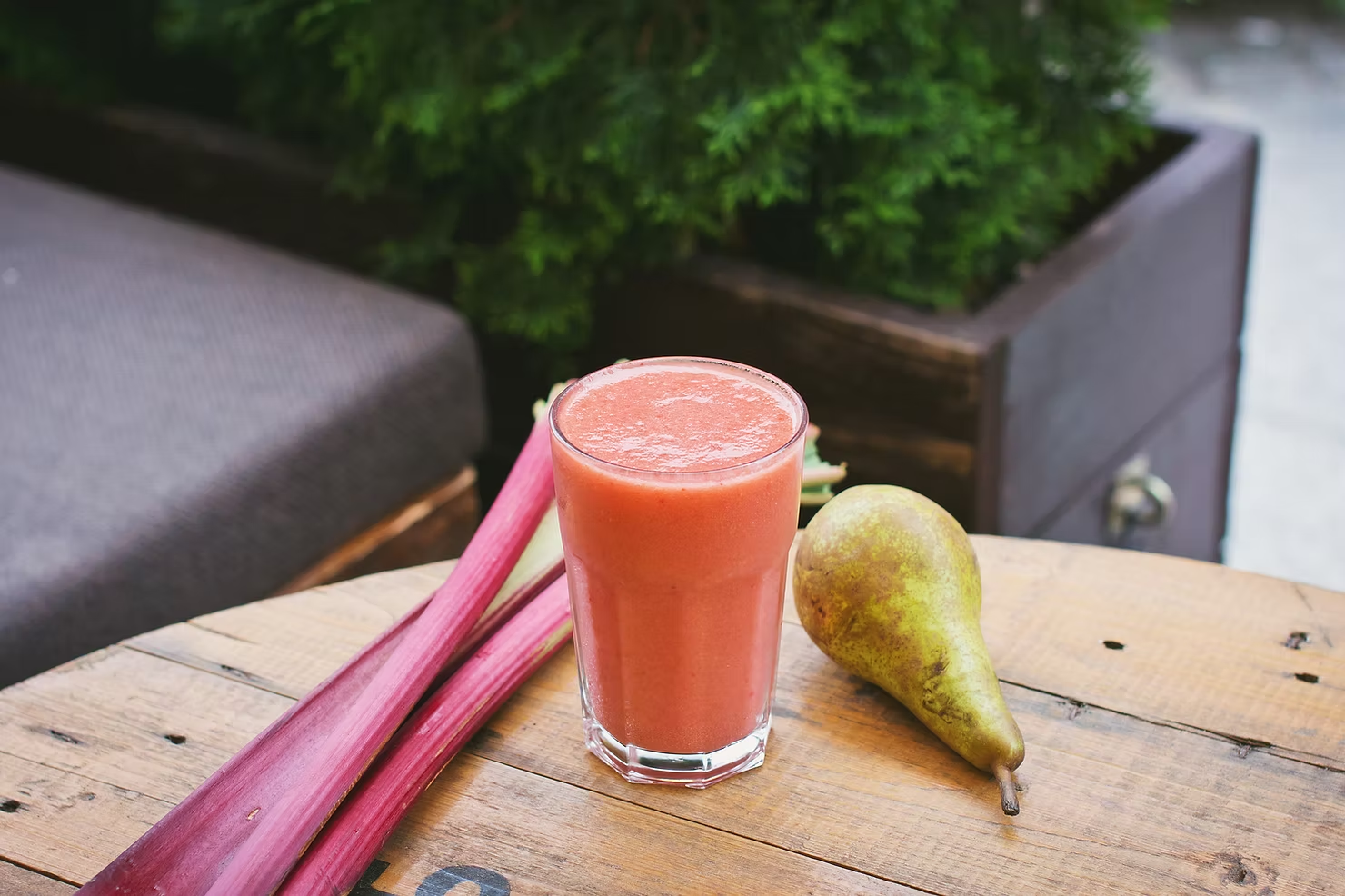
I sometimes have liquid meals and I especially make a lot of vegetable juice.
Sometimes it’s vegetable juice, sometimes it’s smoothies. I get so many questions every time I share this on my account that I thought there was a lot of confusion, so I wanted to clarify everything in this post.
What kind of machine do we use to juice vegetables?
The best machine for juicing vegetables is a “slow juicer.” They don’t have blades; they crush the vegetables, minimizing fiber release. Because it’s bladeless, the vitamins in juice made with this machine stay fresh for up to 72 hours. I consume it within 48 hours to be on the safe side.
I share the brand of my machine on my social media accounts. When I bought it, local brands hadn’t yet released slow juicers. That’s why I bought this foreign brand. Now local brands have released them, but I haven’t researched their features. I thought about it for two years before buying it. The price seemed expensive, but I finally took the plunge and bought it. It’s one of the best things I’ve ever bought for my kitchen.
What happens if I use a regular juicer for vegetables/fruits?
It’s better than nothing; you’ll still have vegetable juice, but a lot of the fiber will be removed. Also, because it’s a blade system, you need to drink it immediately after juicing, otherwise the vitamins will be lost within 15-20 minutes.
Why do we drink vegetable juice?
I always say it. Our salvation lies in vegetables. The more colorful vegetables we can introduce into our bodies, the healthier we will be. Each color offers a different benefit. When we squeeze the juice from vegetables, we ingest far more vitamins and minerals than we could eat in one go. For example, can we eat a kilo of spinach in one sitting? Usually not… But we can easily drink it all at once. We still eat vegetables throughout the day, that’s a separate matter. We take this as an extra vitamin supplement.
Does it replace a meal?
Sometimes yes, sometimes no. It completely depends on your body, your metabolism, and what you ate during the day and the day before. If I had a good meal the night before, I don’t wake up hungry in the morning. That’s when I drink a glass of vegetable juice and start my day. I have breakfast around 11-12, but sometimes I wake up very hungry. On those mornings, a glass of vegetable juice can’t keep me going. I have breakfast and then drink it as a snack. So I listen to my body. Whatever it needs that day, I give it that.
Vegetable juice, not fruit juice
I don’t juice fruit except grapefruit or sour fruits. When it comes to fruit, there are two points to consider. Fruit contains fructose, but whole fruit, i.e., fresh fruit, also contains vitamins, minerals, water, and fiber. This ensures that the sugar is absorbed slowly, but if we juice it, it will lose its fiber and enter the body directly as sugar, rapidly raising blood sugar. Therefore, whole, fresh fruit is very important in our fruit choices.
Do I buy organic vegetables?
I cut back on my clothing, makeup, and shoe shopping, or even don’t shop at all, and try to buy all my vegetables and legumes organically. Clothes, cosmetics, etc., will one day be thrown away, but this body is necessary for us until our last breath. We have to take good care of it. That’s why I pay particular attention to ensuring that the vegetables I’m going to juice are organic. I think that the juice of a vegetable treated with pesticides will do more harm than good.
How do I store vegetable juices?
After squeezing it, I store it in a glass jar with a lid in the refrigerator.

What’s the difference between a smoothie and a regular smoothie?
A smoothie is a completely different method. In a smoothie, the juice of the vegetables is extracted, and the fiber and pulp are used. For example: 1 handful of parsley, 2 handfuls of spinach, ½ green apple, ½ lemon juice, and ½ cup of drinking water are blended to create a drink. That’s a smoothie. However, as you’ll see, it can’t even be compared to the amount of vegetables in a glass of vegetable juice. You can use a maximum of 2-3 handfuls of vegetables in a smoothie, while you can drink 1 kilo of leafy green vegetables in vegetable juice.
But smoothies are more filling. When you add yogurt, kefir, almond milk, avocado, or seeds, it can replace a meal.
What kind of machine do you use to make a smoothie?
You don’t need a special machine for making a smoothie. You can even make one with your home blender, but I bought a smoothie maker 4 years ago. You know, the kind with its own cup on top. Back then, it was only available from one brand. It has two different sizes of cups on top. You can make your smoothie, grab the cup, and start drinking it right away; you can take it with you when you go out. I used it a lot because of its practicality. I bought it for 79 TL four years ago, and now it’s around 119 TL. There are much more expensive ones, but I think there’s no need to spend that much money to make a smoothie. These simple machines do the job very well.
I used it so much that my friends always bought it for me as a birthday gift…
How long does a smoothie last after it’s made?
Since smoothies are made with a blade system, they should be consumed within 15-20 minutes of preparation. I made a very enjoyable and filling smoothie, and I’m ending this week’s post with its recipe.
Ingredients:
½ cup kefir
½ cup water
4 pieces of steamed pumpkin
5 cashews
I blended all of these together and it was ready. Because pumpkin is very high in fiber, it was incredibly filling. It also satisfies the body’s sweet cravings with its natural sugars. I recommend trying it before pumpkin season ends.
Wishing everyone healthy, happy, and sugar-free days.
With love,
Sema