
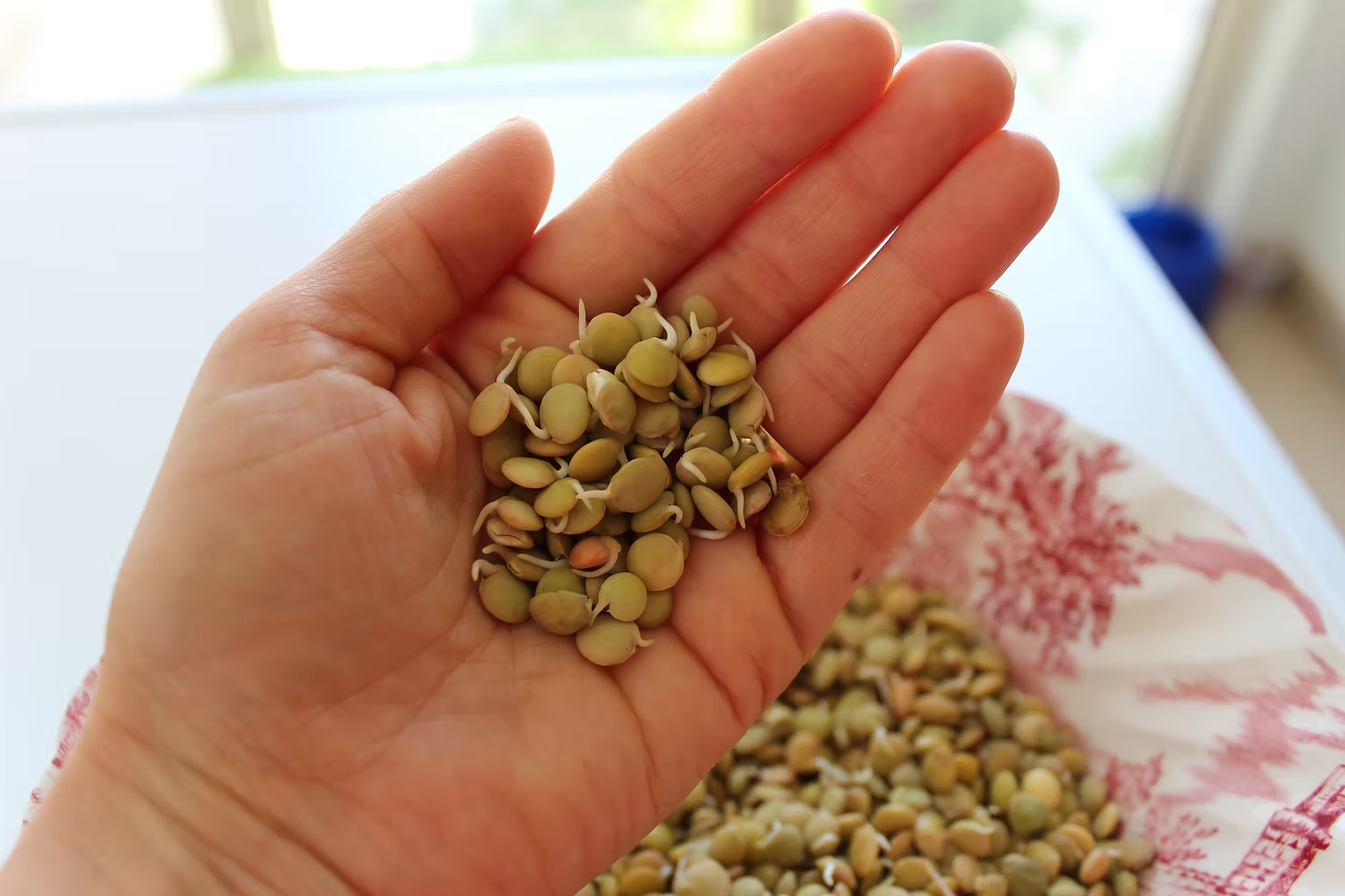
Now I’m taking my cooking to the next level: sprouting all the legumes in my kitchen, fermenting vegetables, making kefir and yogurt. All of this means life. I’m not alone in my kitchen; there are many living things living with me. Seeing their daily changes, and knowing their benefits, is the best way to consume them with peace of mind.
Sprouting is essentially reviving, revitalizing, and giving life back to legumes, seeds, and grains. Since I don’t use grains much, I generally sprout legumes. Actually, sprouting grains also significantly reduces their gluten content, but I haven’t quite dared to try it yet. Maybe I’ll try it soon.
What are the benefits of sprouting?
Legumes are easier to digest when consumed sprouted. Many of us experience bloating and gas after eating legumes. During sprouting, phytic acid, lectins, saponins, and similar indigestible anti-nutrients in legumes or seeds are minimized. Thus, the body can fully absorb vitamins and amino acids like B12, magnesium, iron, and zinc from legumes.
The protein content in legumes increases. The carbohydrate and starch content decreases.
The fiber content increases.
It helps to alkalize our bodies. Because what we eat is now transformed into a living food, it helps with acid elimination.
It reduces allergens in those with legume and grain allergies.
It’s also very enjoyable to make. We all sprouted beans as children. This is the same method. In fact, doing this with children at home can be both fun and very educational for them.
Sprouting Procedure:
The most important rule is that the legumes we use must be organic and pesticide-free. Sprouting legumes that have been treated with pesticides will not be very beneficial.
We soak the legumes we will sprout (I will show green lentils here) in water for 8-12 hours and then drain them.
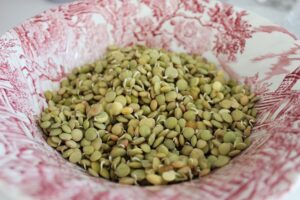
We place it in a porcelain or glass bowl and cover it.
In the evening, we wash it again, drain it, and put it back in the same container, continuing to cover it. It stays at room temperature during this waiting period. We repeat this process every 12 hours. So, every morning and evening, we water our legumes and drain the excess water.
If we call the first day of soaking day 1, then sprouting begins on the morning of day 2. And now the most enjoyable time begins. I can’t resist checking on them all the time.
By the morning of day 3, sprouting is quite complete. I don’t continue from here on. You can extend it to day 4 if you wish.
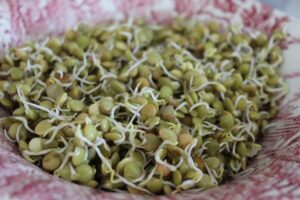
You can store your sprouted legumes in a glass jar in the refrigerator for 3-4 days. You can eat them raw or cook them. Since they’re already quite soft, they’ll cook very quickly.
This time I also sprouted buckwheat and dried beans. I lightly steamed them and made a salad.

This salad turned out great:
Ingredients:
Steamed sprouted dried beans and buckwheat (2-3 minutes)
Pickles
Raw broccoli pieces
Olive oil, pomegranate molasses, and salt
I combined everything to create a dish that is both delicious, filling, and healthy.
I want to wish those who will try sprouting good health in advance.
*This text was originally published on May 12, 2017, on my column at www.hthayat.com and is taken from there.