Everyone has this “What should I eat before and after exercise?” dilemma. I know people who don’t exercise, or even walk, because they can’t stick to pre- and post-exercise eating “rules” based on hearsay. We’re constantly looking for excuses to postpone exercise, and this can be the biggest excuse we can cling to. Now, put everything you know aside; I’ve brought you the latest, most up-to-date, and healthy information.
The idea that you should eat bread and carbohydrates before exercise and three chicken breasts within 45 minutes of exercise is just an urban legend. None of us are preparing for the World Women’s (or Men’s) Bodybuilding Championship. If we were, we would have a much more carefully calculated diet. We are simply people who exercise 4-5 times a week (hopefully!) for our health. Here are some nutritional recommendations for us:
Drink water before and during your workout. Continue drinking water not only during exercise but throughout the day you exercise.
The same logic applies to nutrition. Believe it or not, what you eat right before exercise is no different than what you ate the night before or two days before. In fact, what you ate two days before will contribute more to your performance and health. So, what you eat an hour before or two hours after doesn’t really matter.
Even a Ferrari will run if you put the right fuel in it. Adding 5 liters of good quality gasoline just before speeding won’t improve performance; it could even cause a malfunction. The entire tank needs to be filled with good quality gasoline, and the tank should have been clean for a while. You can think of achieving the best results in your body, nutrition, and exercise in the same way.
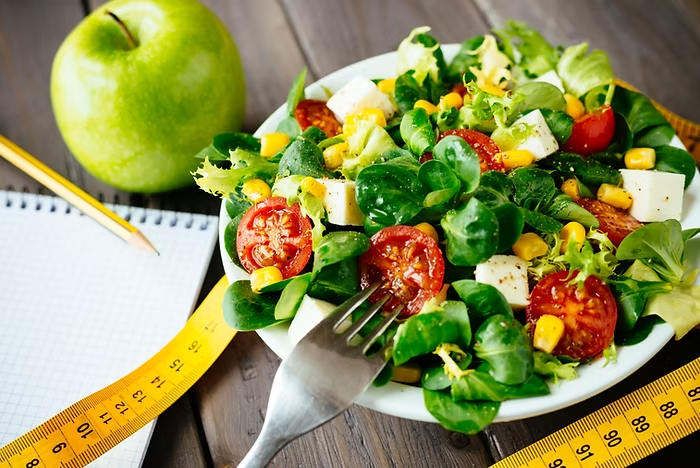
An hour before exercise, you can opt for something easily digestible. This could be a green smoothie or vegetable juice. The vitamins and minerals in it will provide the energy you need during your workout. If you don’t want vegetable juice, steamed vegetables or raw nut butters (like almond or cashew butter) can be very good options.
For those with hypoglycemia, consuming good fats before exercise is very important. When my blood sugar used to drop, I would always eat a teaspoon of coconut oil or cheese with walnuts before exercise. Carbohydrates like bread before exercise can cause your blood sugar to drop rapidly during exercise.
If you eat good fats, you’ll burn them, and then you’ll crave fat again. This is a cycle we want. If you eat sugar or grains, you’ll probably burn sugar, and then you’ll crave sugar and carbohydrates again. The worst-case scenario is consuming carbohydrates like bread and grains before exercise. This puts us in a cycle we don’t want.
After exercise, it’s essential to eat things that will alkalize the body. To prevent lactic acid, which we secrete during exercise, from accumulating in the muscles, we should consume plenty of greens and plant-based proteins, as well as pure animal protein (such as seasonal fish and meat from pasture-raised animals). It is recommended to avoid all grains and sugars (including fruit) for 1-2 hours after exercise.
In general, healthy eating is necessary before, after, and at all times. If nutrition is poor, the exercise we do has almost no benefit. These are like siblings; they must complement each other. One without the other is unfortunately ineffective.
NOTE: This information is taken from Dr. Daryl Gioffre’s book “Get Off Your Acid” and my FMCA lecture notes. It is also based on my personal experiences.
I wish everyone healthy, happy, and sugar-free days.