
Last week, I briefly touched upon the topic of thyroid disorders in my article. This week, I wanted to elaborate further. I correspond and talk with many people every day, and I am saddened to see how rapidly thyroid diseases are increasing and how many people are affected. Previously, I observed that the most common chronic diseases in society were related to diabetes, but now this has visibly shifted to thyroid disorders.
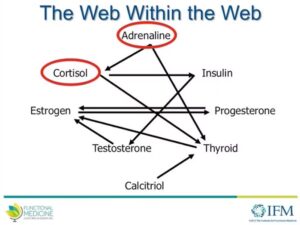
I’m reaching this conclusion not from statistical data, but from my experiences and observations within society. I attribute the reasons for this increase primarily to our inability to control stress. To help you visualize it, I’ve included a visual below. Last week, I explained how the system works and what we can do to manage stress.
What should the diet be like for thyroid problems?
This is probably the most frequent question I get… In general, even without a disease, it’s very important to eliminate the following from our diet, but they are vitally important in these types of diseases:
Refined sugar
Packaged foods (wafers, biscuits, chips)
Carbonated drinks
Foods made with white flour
High-carbohydrate foods like bagels, pastries, and pasta
Excessive dairy consumption (milk, yogurt, cheese, kefir – consuming them with every meal and every day leads to overdose. Especially if it’s conventional production, this is due to artificial hormones used to impregnate animals and the inflammatory effects of cow’s milk)
After this initial step, the most necessary step, especially for thyroid and other hormonal diseases, is to improve gut health. Gut health and the proper functioning of hormones are directly related. As gut health improves, hormone secretion also finds its balance.
What we can do to improve gut health…
In addition to the above points, follow a diet free of grains and wheat for a while.
Adding probiotics to our diet, such as probiotic vegetables, homemade pickles, and traditional vinegar.
Following a diet high in phytonutrients, meaning making colorful vegetables and fruits of every color and variety the main food in our diet. Eating green, yellow, orange, white/brown, purple, red vegetables and fruits of every color, almost raw, every day. As these vegetables increase and become the main element of your diet, you will crave other things that shouldn’t be eaten less. We will move from the carbohydrate cycle to the rainbow cycle. What a romantic diet, isn’t it…
There are also more specific diets for thyroid disorders. Such as AIP, elimination diets… However, I think it would be challenging for a beginner to directly switch to these diets. My general approach is always to adapt feasible things to life. Even applying the above points in the first stage will create very big changes. Therefore, I recommend going step by step and first adapting these to your life. If your values still don’t improve, you can resort to the stricter diets I mentioned above. However, I have witnessed countless times in the people I work with that even applying the points I described leads to very good changes and improvements. So, I think you can take the first step without fear, anxiety, or questioning whether you can do it…
The most frequent question I get is whether to avoid vegetables like cauliflower and cabbage in thyroid disorders. However, everyone who asks this consumes sugar, gluten, processed foods, bread, and sweets. Before even getting to cauliflower and cabbage, these things need to be eliminated first. There’s absolutely no logical explanation for eating cake one evening and then avoiding cabbage the next. First, the things I mentioned need to be eliminated. Then, if necessary, an Elimination Diet or AIP diet should be followed. Stress must be controlled. So, before getting to cabbage and cauliflower, there are other things that need to be addressed and monitored over years 🙂 My dear vegetables have a bad reputation 🙂 Functional Medicine doesn’t eliminate these for thyroid disorders. It regulates immunity with elimination and strengthens the body with missing supplements. I have witnessed many times in my clients that thyroid medication dosages have been reduced or even completely stopped. Unfortunately, hoping for improvement by avoiding cabbage and cauliflower is nothing more than a rosy self-deception.
Again, I must mention that adopting a peaceful, positive, and stress-free lifestyle is as important as, or even more important than, nutrition. If you’re wondering how to manage stress, I included tips for that in last week’s post…
No hormone works independently. As you can see in the image above, when we experience stress and remain in that state for a long time, we secrete high levels of cortisol. As you can see, it is directly linked to thyroid hormone. If it remains excessively high, it automatically affects thyroid hormone as well.
If you’re wondering “How do I control stress, how do I apply these methods?”, you can always join my Mindfulness programs. You can access the programs via this link.
I wish everyone healthy, happy, and sugar-free days.
Note: The image is an excerpt from my IFM lecture notes, specifically the section on Stress and Thyroid.
With love,
Sema