I was watching a TV series recently. A young boy is being forced by his friends to meditate somewhere. The boy sits down, closes his eyes. Then his friend asks, “How was meditation for you?” The boy replies, “I close my eyes and remember that I have 150,000 TL in debt.” As soon as I heard this, I thought, “This is true for everyone,” and decided to write this article for you. We close our eyes, and thoughts, difficulties, and experiences from our daily lives come to mind. Meditating doesn’t mean closing our eyes and trying to forget, not remember, or not see these things. Because we think this way, we give up on meditating because we can’t keep these thoughts in mind. However, it’s very normal for these thoughts to come, and I wanted to compile and share with you in this article how to do mindfulness-based meditation.
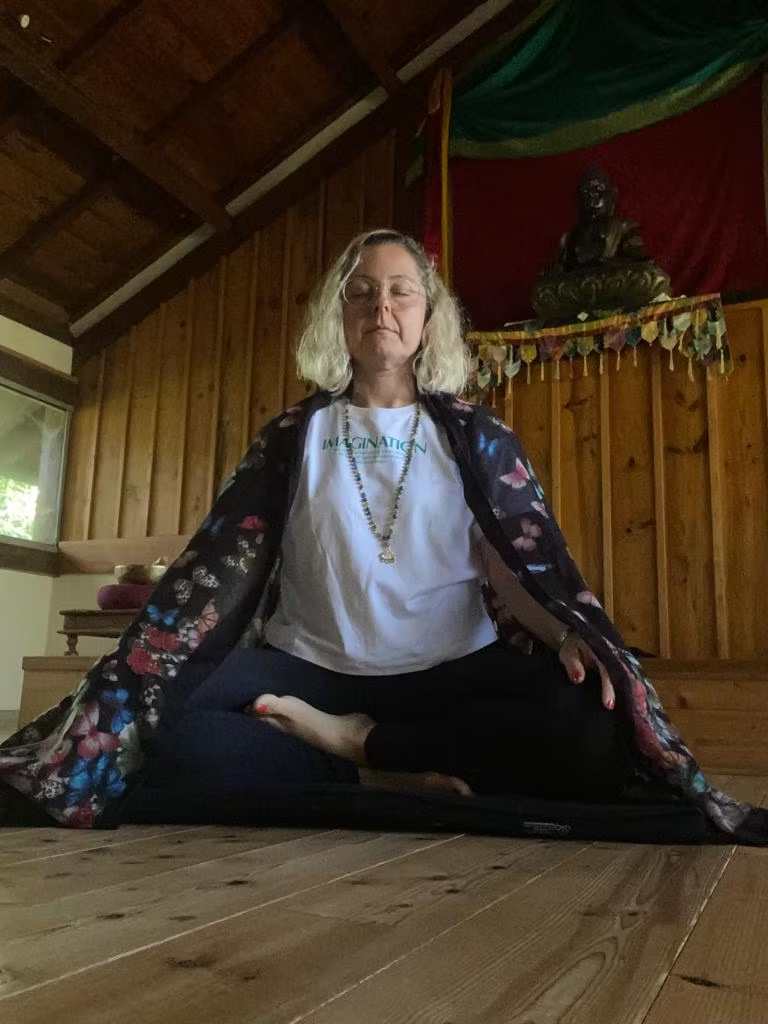
The photo is from a silent retreat I did in France in July 2022.
* First, choose a suitable place for meditation. It can be any place where you can sit undisturbed; a corner of your bedroom or any quiet corner in your house. Place your meditation cushion or chair in this area. Arrange the objects around you in your chosen space in a way that reminds you of your meditative purpose and makes the environment feel peaceful and sacred. You can do this by placing a favorite flower, a calming picture or object, or your favorite spiritual books in your seating area for a few minutes of reading. Create this space for yourself with enjoyment.
Next, choose a time that fits your daily schedule so you can meditate regularly. If you like getting up early in the morning, you can try meditating before breakfast. If evening is convenient for you, you can try meditating in the evening. Start with meditations that last 10-20 minutes. Then you can try doing it more frequently or for longer periods. After a while, daily meditation exercises will feel like showering or brushing your teeth every day. It can bring regular cleansing and relaxation to your heart and mind.
Find a cushion or chair where you can sit upright without tensing your body too much. Take a position where your hands are in a relaxed position, your heart is beating calmly, your eyes are gently closed, and your body is firmly in contact with the earth. First, feel your body and consciously soften any tension you notice. Put aside habitual thoughts and plans. Focus on the sensations your breathing creates in your body. Take a few deep breaths to notice where in your body you feel your breath most intensely and comfortably—the cool air or vibration in your nostrils and throat, the rise or fall of your chest or abdomen. Then return to your normal breathing. Feel how gently the sensations of normal breathing come and go in your body, and relax with each breath as you feel this.
With each breath, your mind will likely wander. When you become aware of this, regardless of how long you’ve been distracted, focus on your next breath. Before returning to focus, describe where your mind just went with a word like “thought,” “jumping,” “sound,” or “itching.” After gently and quietly describing where your focus went with a word, gently return to your next breath. Describing this state with a word and then refocusing on your breath will be the most beneficial step in your meditation practice.
While seated, allow for changes in the natural rhythm of your breath; short, long, fast, slow, hard, or easy breaths. Relax with each breath. When your breath is slow and gentle, allow your focus to be as attentive and gentle as your breath.
Like training a puppy, gently and patiently bring your focus back to your breath thousands of times. After weeks and months of this exercise, you will learn to use your breath to relax and focus on your center. During this process, you will encounter natural cycles, such as stormy and calm days, that change within themselves. By focusing carefully on the experience, you will see how your breath connects your mind and body, calming and relaxing both.
Working with breath also lays the groundwork for other types of meditation. After developing new skills like calming and connecting with your breath, you can use your meditations for healing and raising awareness at all levels for both body and mind. You will discover how solid a foundation breath awareness provides for everything you do.
With love,
Sema