I completely stopped eating meat for a while. I was vegetarian for about two years. This was a choice I made purely for ethical reasons. I’ve been eating red meat occasionally for a while now, but I choose its source very carefully. Chicken has a bad reputation, but believe me, the conditions under which cattle are raised are even worse than chicken. The hormones and medications given to animals leave irreversible damage in our bodies. I’ll talk about that sometime.
In the past, I did a lot of research on fish, and I wrote about it in one of my HTHayat articles. I wanted to bring that part here…
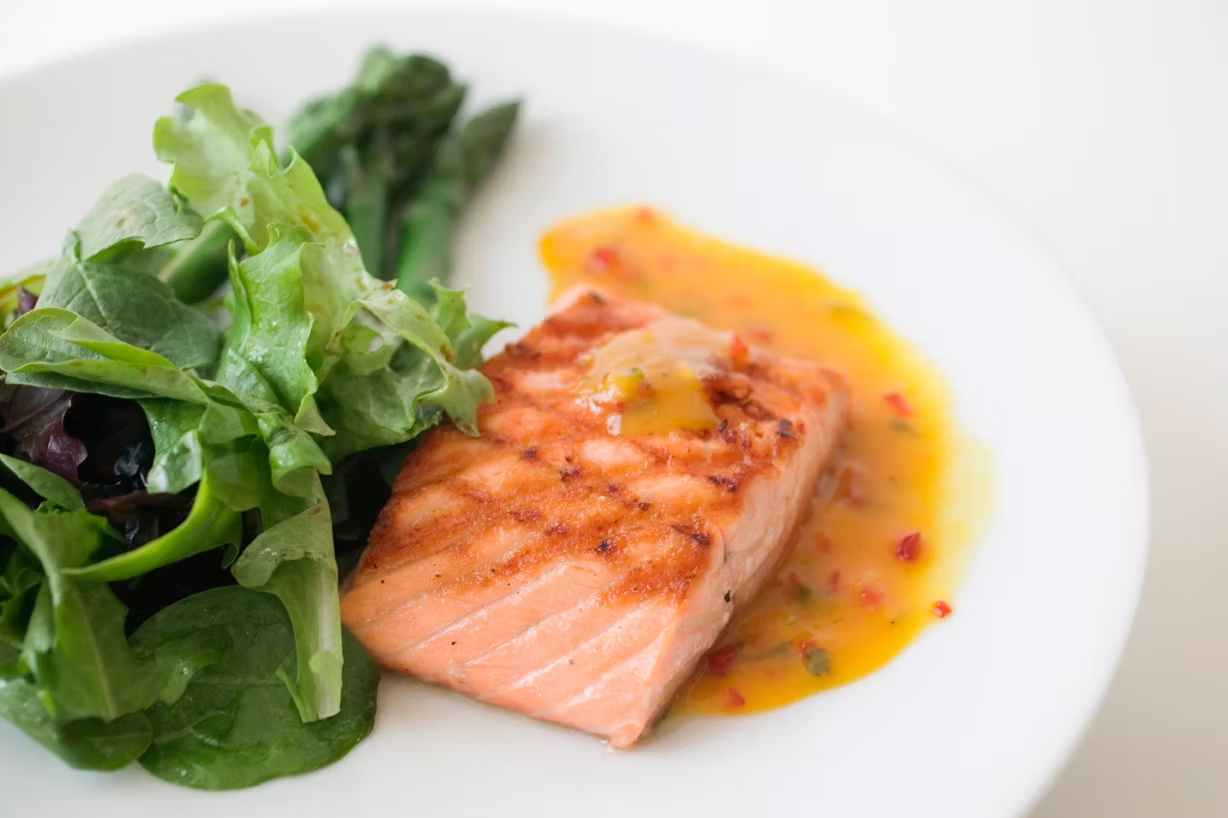
I even gave up kebabs, but I couldn’t give up fish. For the first six months of my vegetarian life, I ate fish, meaning I became pescetarian. Most of this fish consisted of salmon, which is described as “very healthy,” and tuna, which is easily accessible. After extensive research, I decided to stop eating fish as well. I became completely vegetarian. After going without fish for three months, I was practically craving anchovies when the fishing ban ended. One day I woke up and rebelled against my wife, saying, “We’re going to Kadıköy quickly, I’m going to eat anchovies!” And I think I ate a kilo of anchovies that day. I wanted it, I desperately wanted to eat fish. I thought, “My body must need it.” I couldn’t cook it myself, but I ate fish 3-4 times that winter. Now, what I want to talk about here is salmon and farmed fish…
Salmon production and farmed fish
During my research into giving up fish, I learned a lot. First of all, I gave up salmon, which I consumed the most. You know how there are countless benefits written about salmon? Yes, they’re all true, but only if you can find wild-caught, real cold-water salmon… And even that is incredibly difficult to find, not just in Turkey, but even in the world. Salmon production is now a huge industry, and the vast majority of salmon we eat, consumed worldwide, is farmed salmon. Farmed salmon (and indeed all farmed fish) live in cages, unable to swim, millions crammed together. They are not naturally fed; they are fed by humans. If a disease spreads, all the fish in the cages are treated with antibiotics and other medications. Normally, the rule of nature is that big fish eat small fish, but the situation is different in farms. Most fish like tuna and salmon are fed not small fish, but industrially produced feeds containing grains, soy, and chemicals. Salmon that are free in nature feed on shrimp, so their flesh is pink. But salmon raised in farm conditions with processed feed have gray flesh. Well, humanity finds a solution to that too, adding “synthetic astaxanthin,” produced from petrochemicals, to their feed. Synthetic astaxanthin is not a substance approved for human consumption; it can only be used as a feed additive in the fish and poultry industries. So, since our salmon’s flesh is pink, it’s ready for sale. In short, human hands are once again ruining everything they touch in nature.
A fish raised with so many chemicals is described as “very healthy” without any consideration of these details. If we can find naturally raised, wild-caught salmon, and if we can afford it, then we’ll benefit from all those benefits described in pages and pages. For all these reasons, I’ve removed salmon from my diet. The situation is pretty much the same for all other farmed fish.
The same conditions apply to tuna. Tuna also carries a high mercury load.
In conclusion, what I’m saying is… we shouldn’t stray from fish caught in season in the Marmara Sea, the Black Sea, and the Aegean Sea, fish that have been naturally fed and grown. We are very lucky to be surrounded by seas. Let’s eat our own fresh fish, without getting involved in complicated schemes.
There is a lot of pollution in the seas too, but I won’t go into that much detail. If I did, as I explained in my article “I’m rebelling against the nutrition detectives,” living and eating would become impossible…
Lots of love to everyone, healthy, happy, sugar-free days 🙂
This text is taken from an article published on July 28, 2017, in my column on www.hthayat.com.