“Where did this gluten-free diet article come from again?” If you ask, it’s been on my mind for a long time. I’ve been getting and seeing a lot of hesitant, anxious, and confused questions about gluten-free diets. I said, “It’s time to elaborate on this today.” Where did this gluten-free diet craze come from? How can the Turkish people, who love bulgur pilaf and bread, cope with this?
For most people living in this country, one of the most enjoyable dishes is tomatoes, cheese, olives, and a slice of bread. At least for me. I prepared this dish yesterday after shopping at the market and planning to eat vegetables, but suddenly my eyes turned to cheese and bread. We all crave it sometimes. I’ve had carbohydrates, I’ve had gluten… But how? Because I’m balanced. I wanted to explain the details to you.
Everyone has a different opinion. Bread has already been declared the enemy. No bulgur, no pasta, no pastries, no biscuits, nothing… Is a gluten-free diet necessary, why, how, for what reason, how much…? Gluten-Free Diet 101, let’s begin.
Gluten What is it: Gluten is the protein found in wheat. It has a sticky texture. It is found in wheat, bulgur, rye, barley, and everything derived from them.
What does gluten do to us: Gluten disrupts the gut flora. Disruption of the gut flora can lead to many diseases.
Did our grandmothers eat gluten-free? Were they all healthy? No, wheat has been a part of the diet in Anatolia for centuries. The problem arose as follows: In the late 1940s, during World War II, wheat was genetically modified in laboratories to increase yield. The yield increased tenfold from one wheat grain harvested from a field. The gluten in this genetically modified wheat disrupted human anatomy. Of course, the excessive amount of sugar entering our diets, the development of industry, and the massive growth of the food and beverage industry, combined with the packaged, preservative-laden products that entered our lives, formed a Voltron that destroyed our bodies. Notice that autoimmune and chronic diseases have surged in the last 15-20 years. Our mothers were luckier in terms of these types of immune system disorders. Those born in 1970 and later were the most affected by this change because our childhood and youth were the most exposed to it.
Why gluten-free diets have become fashionable or a necessity: With the rise of autoimmune diseases, and the inadequacy of medication in treating them, it has become clear that the real cure lies in nutrition and quality of life. Improving gut health is the most crucial step in healing the body. To achieve this, it’s necessary to address the body as a whole and focus on gut health. So how does the gut heal? First, it needs to be cleansed of gluten adhering to its cells. And right alongside that, sugar and chemicals. Nourishing the good bacteria living in the gut and removing the bad bacteria has become essential. I won’t go into too much detail; you can find that information with a simple Google search. I want to talk about another aspect of the issue.
You’ve somehow switched to a gluten-free diet, it was recommended, or you decided to. What does this actually mean? It means removing wheat and its derivatives from your life and increasing other nutrients that are beneficial to your body. A gluten-free diet doesn’t mean simply buying gluten-free flours, making bread, pastries, and pies, and continuing that routine. You can read more about gluten-free flours in my article “Gluten-Free Flours.” As Turkish people, we are very fond of bread, rice, pastries, and bagels. The main principle of a gluten-free diet is to remove these from your diet and increase colorful vegetables, fruits, good legumes, good fats, and good protein sources. In other words, it means getting the energy your body needs not from wheat and its derivatives, but from the food groups mentioned in the previous sentence. A gluten-free diet isn’t about eating two pastries made with gluten-free flour for breakfast. Although quantities vary from person to person and depending on what we eat during the day, a large breakfast consisting of 2 eggs, a large salad with colorful vegetables, unroasted nuts, good cheese, and a piece of fruit if needed, means feeling completely full. Of course, sometimes one craves pastries or cakes, but “occasionally” 🙂 That’s when you can make them with the healthy flours I mentioned in my “Gluten-Free Flours” article.
How do I meet my body’s carbohydrate needs? It’s true that the body and brain need carbohydrates for energy, but the source of the carbohydrate is crucial. We already get the carbohydrates we need best from vegetables and fruits. No human body needs carbohydrates and grains like two slices of bread in the morning, four spoonfuls of bulgur pilaf at lunch, three slices of pizza in the evening, or more bread and grains again. The good carbohydrates the body needs are the right carbohydrates that come from vegetables and fruits. You might be losing weight when you give up wheat. This is a clear indication that most of your daily calories were previously coming from bread/grains. If you don’t want to lose that much weight, I recommend increasing your intake of beneficial food groups and closing that calorie gap from there. The logic here is: don’t consume grains to feel full, but consume other food groups in a balanced way. Unless you have a chronic or autoimmune disorder, you can use grains only occasionally in certain amounts for pleasure.
So, are we not going to eat bagels at all for Sunday morning breakfast? Here’s the key point 🙂 Everyone gets stuck here. I recommend following a gluten-free diet only with the advice of your doctor or a specialist, until your gut health improves. No recovery diet (Keto, FODMAP, GAPS, Elimination, AIP, etc.) should be followed forever. These are like medicine, focused on recovery. Personally, I did the same. For about two years, I didn’t eat anything with gluten and solved my endless gas and indigestion problems. I still eat 95% gluten-free, but sometimes, there’s gluten in 5%, but my gut handles that much on its own. I learned this through trial and error. There’s no escaping gluten. It always finds its way back into our lives, and it will. Unless you have celiac disease, once you’ve established a routine for healthy bowel function, your body will tolerate a small piece of pastry as a treat. The important thing is that it’s not part of your routine, meaning you don’t eat pastry every morning. When we eat clean and healthy 90% of the time, the body will handle the remaining 10%. No one can eat 100% healthy food. We’d have to live on a mountaintop to do that, and even that’s impossible in today’s world. There are factors we can’t control. Therefore, there’s no need to make utopian plans or get caught up in disaster scenarios we read online. We need to protect our mental health too, right? 🙂 However, when choosing wheat, it’s beneficial to opt for genetically unaltered Anatolian wheat varieties like spelt, black wheat, and emmer. The gluten in these is more easily digested by the intestines.
Diabetes, fasting, blood sugar balance, and the relationship with gluten: I get a lot of questions from people with diabetes. When they switch to a gluten-free diet (although I don’t think every diabetic needs to follow a gluten-free diet), they fear hypoglycemia because they think cutting out gluten automatically means cutting out grains as well. While it’s possible to continue with gluten-free grains, it’s not really necessary. Whether gluten-containing or gluten-free, all grains are high in carbohydrates. It’s actually high carbohydrates that cause hypoglycemia, excessive insulin secretion, and disrupt blood sugar balance. A diet high in fat, protein, and good carbohydrates (vegetables and fruits) is ideal for diabetes and blood sugar control, rather than a diet high in grains. Everything I’ve said above applies to anyone struggling with insulin resistance, hypoglycemia, or Type 2 diabetes.
That’s why doctors like Canan Karatay, Ümit Aktaş, Mustafa Atasoy, and Mark Hyman abroad – all wonderful functional medicine practitioners with a holistic perspective – constantly tell us to stay away from pasta, rice, and bread. The main point is not to upset the balance. The main point is not to overdo it. In other words, not to exceed the dose.
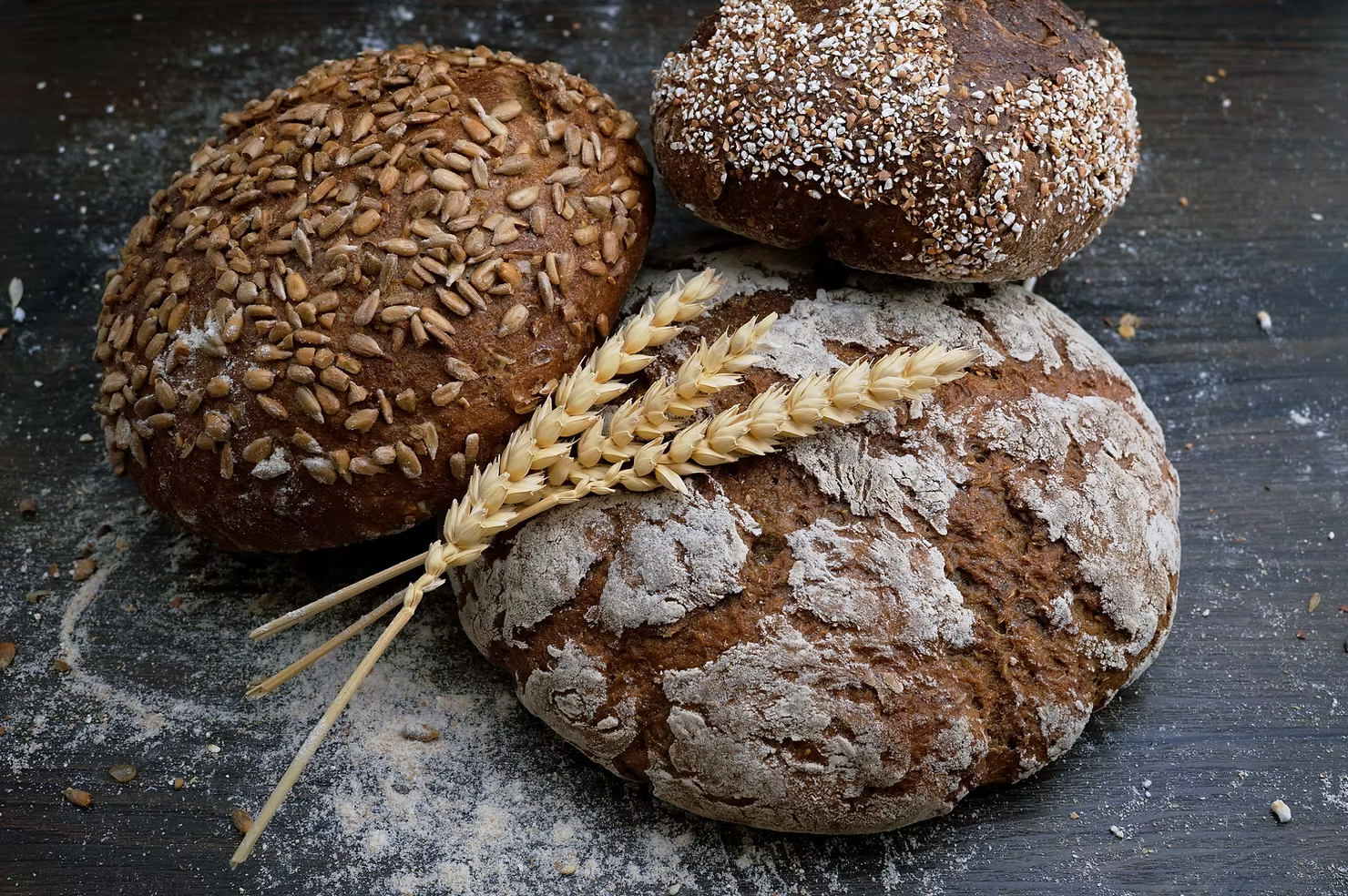
If you are going to eat bread, be sure of its ingredients. Please do not choose the so-called “whole grain” breads sold in supermarkets, which are full of preservatives and don’t mold even after 6 months. If you choose sourdough bread, made with traditional methods, where you are sure of the wheat or rye used, you will find that you stay full longer and you will be eating something relatively more beneficial.
This is a rather long post, but I wanted to write it as an answer to some frequently asked questions. If there are any other things you’re wondering about that I haven’t thought of, please write them in the comments section. I’ll try my best to explain them to the best of my knowledge.
Wishing everyone healthy, happy, and sugar-free days.
With love,
Sema