A healthy body needs a healthy gut. A good way to tell if your gut is healthy is to look at your stool. While many things can change the appearance, color, and texture of your stool, diet is the most common indicator.
Stool Tracking
The shape, structure, and color of our stool provide information about our digestive health on a daily basis. When I sometimes say, “Your gut health should improve,” it’s often interpreted as just constipation/diarrhea; but that’s not enough. Proper bowel function is crucial for all hormone production, nutrient synthesis, your mood, puberty, reproduction, menopause, and every stage of life. Just as blood is an indicator of many conditions in the body, so is daily stool. We will examine our stool every day 🙂 Is it on the surface, sinking, what’s its color, what’s its shape? This will give us very important information about our body.
Let’s talk about stool shape first. This year, one of the first questions asked in every case study at school was, “What number on the chart is the patient’s stool?” This stool chart is called the Bristol Stool Chart; you can see an example below.
Stool Structure and Shape
Type 1: Separate, lumpy, difficult to pass, hard
Type 2: Lumpy, sausage-shaped stool
Type 3: Sausage-shaped stool with cracks on the surface
Type 4: Sausage-shaped stool but smooth and soft (snake-like)
Type 5: Soft and easily passed patches, pieces
Type 6: Soft stool in the form of fluffy pieces and irregular edges, remaining on the surface
Type 7: Completely liquid; no solid pieces
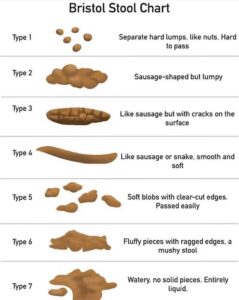
Ideal stool types are Type 3 and Type 4. These are soft and easy to pass. Daily, acute variations are, of course, normal; but if you consistently deviate from Type 3 and Type 4, your digestion is sounding the alarm.
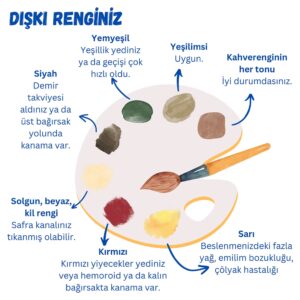
After shape, let’s look at color. The image below provides information about your digestive status based on the color of your stool.
Stool Color
For gut health, a diet free of alcohol, refined sugar, refined grains, and processed foods will help. A diet rich in colorful vegetables, fruits, eggs, animal protein, and if you don’t have IBS (if you do, your stool is probably not Type 3-Type 4), legumes, and nuts will aid in better digestion.
Strong digestion isn’t just about getting rid of gas, bloating, or having easy bowel movements. Those are just effects. If our digestion isn’t working well, everything is affected, from the blood we produce and the oxygen we take in, to our cells, our body’s use of vitamins, and hormone circulation.
Diet can affect the shape and color of stool. Ultimately, stool is water, gut bacteria, and some cells in your body, along with what’s left of undigested food.
Now it’s time to rate our stools and evaluate how our digestion is doing 🙂 Our goal is to maintain a 3-4 shape and a brownish color tone 🙂
Note: It’s important to see your doctor for any unusual color or shape.
With love,
Sema