Unfortunately, many of us now suffer from metabolic and autoimmune diseases. This is a very sad situation, but it is caused by the proliferation of packaged and processed foods in the last 50 years, the departure of agriculture and animal husbandry from natural practices, and policies developed to increase the yield of animals and fruits/vegetables. The way to return our bodies to their factory settings is through nutrition. Medications improve us to a certain extent, but the biggest step to ensure lasting improvement is to change our diet according to each disease and to apply this for life.
Even without an undiagnosed disease, many people have weight problems, fat problems, or a lack of satiety. These are also the next step towards disease, and preventing them by simply changing our diet while there is still time is the best approach.
Today, I want to talk to you about a diet that balances my blood sugar and insulin, is followed by many people around the world, and is supported by many excellent doctors: Low Carb High Fat (LCHF).
The basis of LCHF is to eat a low-carbohydrate diet and get energy from good fats. This isn’t a ketogenic diet, though. A ketogenic diet is quite different, and I think it’s very difficult to follow long-term. Because it also restricts vegetables, it’s personally challenging for me.
What are the main principles of the LCHF diet?
This is a much longer topic, but to summarize briefly, it means avoiding the carbohydrates I’ve listed below as much as possible, and getting plenty of vegetables, good protein, and good fats in your diet. As I always say, our salvation lies in vegetables. You don’t need to count your vegetables by the spoonful. Don’t stop yourself from eating as many vegetables as you like. That would be the greatest favor you could do for yourself. Currently, at the Integrative Nutrition School where I’m studying, I’m taking classes from many valuable professors and learning about over 100 different nutritional systems. Each approach has its own advantages and disadvantages. Every professor/physician understands the nutrition they support in detail. Although they are all based on different principles, the common point of all nutritional approaches is that vegetables are indispensable.
What happens when we follow a low-carbohydrate diet?
The carbohydrates mentioned here that should be avoided include whole wheat and all grains (even if unprocessed), rice, bulgur and its derivatives, oatmeal, quinoa, buckwheat, legumes, and high-sugar fruits like bananas, melons, figs, and dried fruits. Milk and dairy products are also among those not consumed. Carbohydrates are certainly beneficial, but because excess carbohydrates cannot be utilized by the body, they are stored as sugar. This leads to excessive insulin secretion, strain on the pancreas, and subsequently, the storage of sugar as fat. Furthermore, when too many carbohydrates are consumed, sugar balance is disrupted, causing hunger to return very quickly before the next meal.
You’ll be surprised how long you stay full when you follow a low-carbohydrate diet and supplement your satiety with healthy fats.
So, what will satisfy you?
As a society, we’re used to satisfying our hunger with carbohydrates. Even if it’s just a false sense of fullness, we think we’re not full until we eat rice, pasta, or pastries, but the more we eat them, the hungrier we get. In this diet, vegetables, avocados, olive oil, walnuts, almonds, and other healthy fats, along with quality protein, replace bread and carbohydrates.
How will I meet my carbohydrate needs?
All the vegetables, fruits, and dairy products we eat contain carbohydrates, and consuming them in moderation will provide us with the carbohydrates we need.
What if I crave cake or pastries?
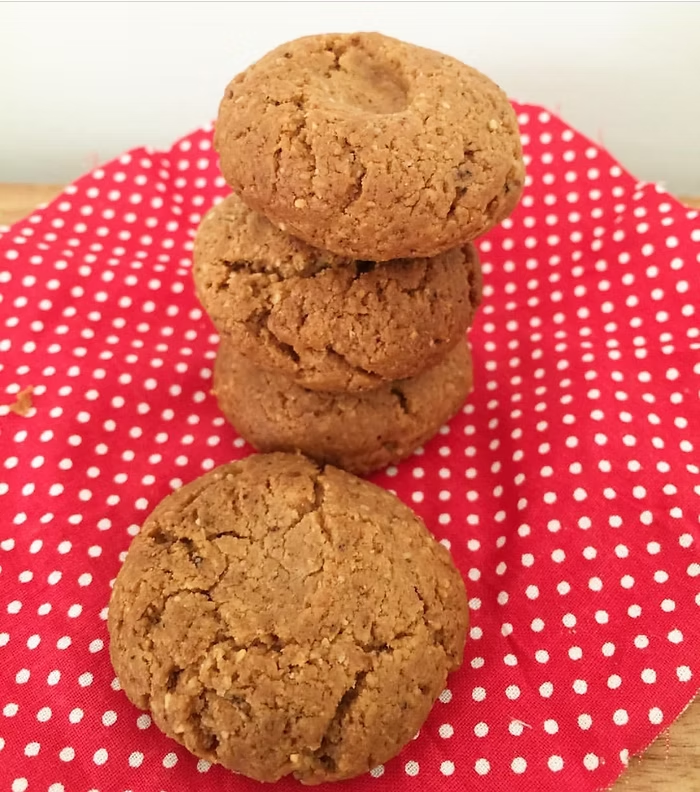
We all get stuck here in the long run, but there’s a solution. You can create wonders using almond flour and coconut flour. I frequently share recipes in my articles, on my blog, and on my Instagram account. You can check them out there. Here’s a recipe for delicious tahini and hazelnut cookies that you can make quickly 😊
Ingredients:
4 tablespoons hazelnut flour (hazelnuts processed in a food processor)
4 tablespoons tahini
1 egg
1/2 teaspoon baking powder or baking soda
Mix all the ingredients and bake at 150 degrees Celsius for 35 minutes. It turns out to be a crunchy cookie, just like the ones you’d call “crispy.” It’ll be your savior with afternoon tea.
Since you won’t experience hunger pangs when you eat this way, you’ll see yourself burning your stored fat quickly. You’ll achieve a firmer and healthier body in a short time, but of course, portion control is always a necessity.
I followed this diet for about 6 months. My life changed. I’ve forgotten what hypoglycemia is, my blood sugar is completely regulated, and I’ve lost a lot of weight. Therefore, this has become my favorite type of diet.
Continuing this for life seems a bit impossible to me, but after my blood sugar stabilized, I gradually reintroduced legumes and gluten-free grains into my diet. If I eat carbohydrates in one meal, I balance it out in subsequent meals. Hypoglycemia significantly reduces the quality of life. If there is anyone with diabetes reading this right now, I recommend researching this dietary plan and consulting a specialist before trying it. Believe me, your life will change…
I wish everyone healthy, happy, and sugar-free days.
NOTE: This article was published on my column at www.hthayat.com on June 30, 2017.