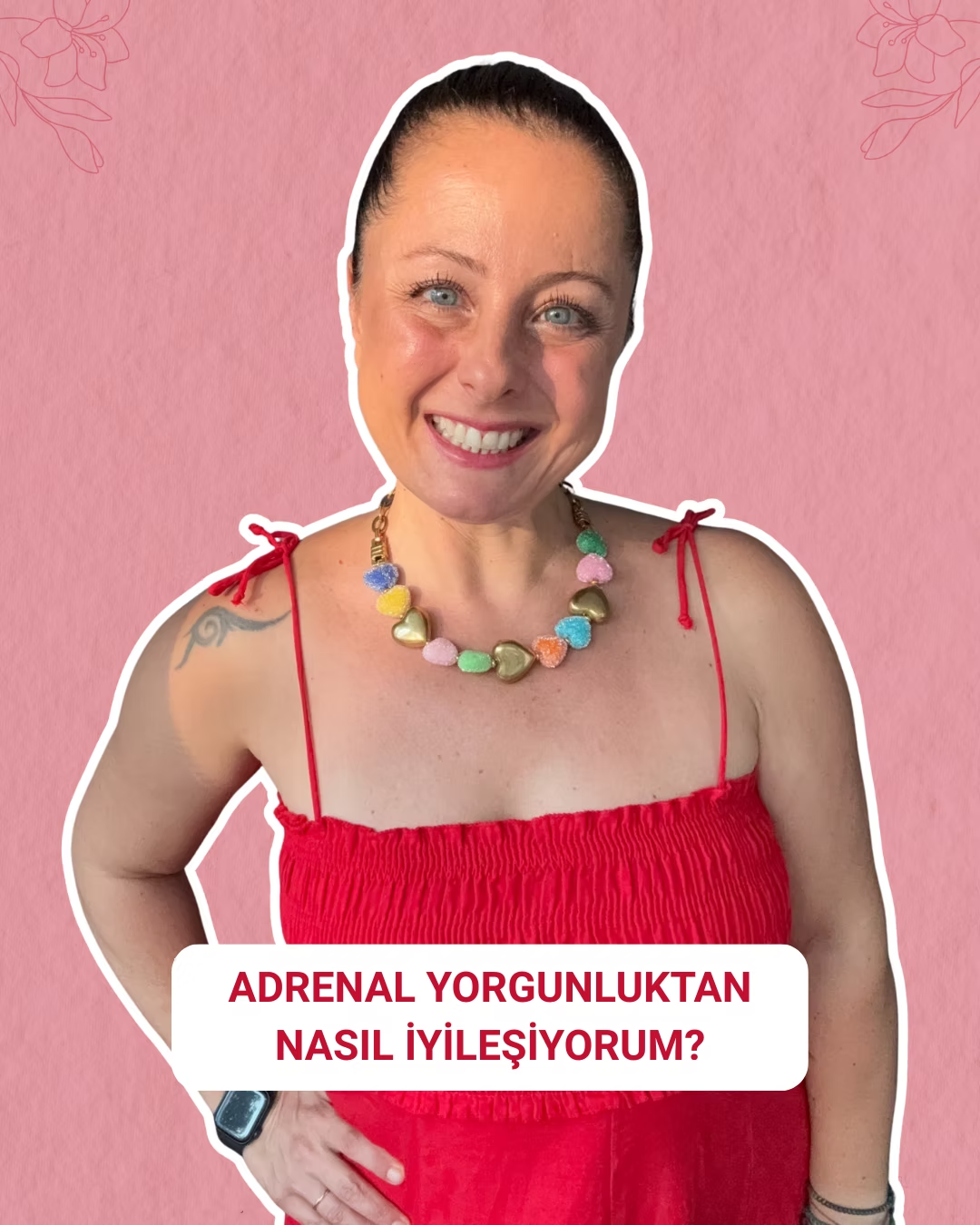
Adrenal Fatigue recovery is a topic everyone is curious about. I personally went through a very tough struggle with this in recent months, and I’m just now beginning to heal. Putting the pieces together, getting a diagnosis, and healing myself took me about a year and a half. During that time, I read at least 20 books, scanned endless literature, took numerous courses, and synthesized it all. In short, getting back on my feet took a very long time. Now, I want to break it down for you in the simplest, most understandable way possible. If any of you are living through this, I’m serving up the solution on a silver platter. Only those who have experienced it can truly understand, and I sincerely wish a speedy recovery to anyone going through it right now.
Adrenal fatigue means the adrenal glands that produce stress hormones are completely exhausted. You either end up with low cortisol (which can feel like depression) or high cortisol like I had (which triggers anxiety). Whether cortisol is high or low, it disrupts the entire system. The body simply can’t produce energy. I was constantly exhausted, unmotivated, and unable to sleep; instead of using the food I ate for energy, my body stored it as fat because my nervous system was stuck in fight-or-flight mode. To survive, the body holds onto fat. Thank goodness that’s all it did, and that I caught it when I did. A more advanced stage of this is cellular degeneration—meaning becoming vulnerable to conditions like cancer. Alongside that, here are the other symptoms experienced in adrenal fatigue:
-
Gaining body fat regardless of exercise and clean eating
-
Irregular menstrual cycles
-
Blood sugar imbalances
-
Brain fog
-
A feeling of pressure in the head, as if it’s about to burst out through the ears (this was my most prominent symptom)
-
Difficulty falling asleep, waking up at 3:00 AM and being unable to fall back asleep, or struggling to wake up in the morning
-
Headaches
-
Frequent urination
-
Fatigue and a complete lack of energy
-
Loss of zest for life
-
Rock-bottom libido
-
Cravings for sweet or salty foods
-
Frequently catching colds or the flu
I spent an entire day crying as I accepted all the fat on my body. I felt deeply grateful to my body for trying to protect me. No one understood what I was going through. No one could connect my symptoms. Once again, I had to take matters into my own hands. I made the diagnosis, got a 24-hour salivary cortisol test, and my diagnosis was confirmed.
This summer, I took the Advanced Hormone Training from IFM (Institute for Functional Medicine). This was the very first topic covered in the course. You can’t even move on to other hormones without talking about the adrenals first. However, it made me sad to realize how rarely this knowledge is applied in practice. I found a doctor in the US who works exclusively on this topic, and I will be grateful to him for the rest of my life. He understood me. I’ve been on this healing journey for 3.5 months now. I made progress in 3.5 months that the doctor said would typically take a year. I feel so much better. Everything is slowly returning to normal.
When you look at it, the essence of this recovery is less about “what I did” and more about “what I stopped doing.” It’s about reducing the things in life that create stress and replacing them with practices that balance the body and the nervous system—guiding the body back into its natural equilibrium. These steps are actually so simple that most people won’t do them because of their simplicity. Think about stopping 5–6 times during the day just to rest, close your eyes, and follow your breath. It sounds so easy, yet it’s remarkably difficult.
Your mind will search for complicated solutions. You might fall into a spiral of confusion, asking, “Where do I start?” or “Which one should I do?” We need to start by simply stopping. It’s our mind searching for complex answers that makes us sick in the first place. Believe me, the solution isn’t hard. Below, I’m sharing the exact steps that truly helped me and that I implemented on my recovery journey.
Step 1: Blood Sugar Balance
In adrenal disorders, the most critical factor is maintaining stable blood sugar. Blood sugar that constantly spikes and crashes (from sweets, pastries, alcohol, or even high-carbohydrate healthy foods) is a major stressor for the body. The ideal dietary approach for this condition is Low-Carb, High-Fat (LCHF). I had a major head start here because my diet was already LCHF. By cutting out legumes as well, I transitioned to a strict low-carb approach.
Step 2: Quitting Intermittent Fasting
While fasting has many benefits, it can be a major trigger for those with adrenal issues because fasting itself acts as a stressor on the body (though I still support cycle-aligned fasting for women dealing with other health concerns).
I quit intermittent fasting. Before bed, I consumed healthy fats that wouldn’t send me into hypoglycemia during the night—like 1 teaspoon of coconut oil, 3–4 walnuts, or 1 teaspoon of tahini or peanut butter. I did the exact same thing right after waking up in the morning. I ate my breakfast no later than an hour after waking up.
Step 3: Dropping Heavy Workouts
I used to do heavy strength training almost every day. While lifting weights is beneficial for the body, in people experiencing adrenal issues, it triggers stress. Furthermore, because the body cannot produce energy, workouts end up draining and depleting whatever energy is left. Only now, after 4 months, am I slowly reintroducing walks.
Step 4: Somatic Exercises, Yoga, Breathwork, and Meditation
This step is the cornerstone of recovery. You have to signal “we are safe” to your nervous system, or the previous three steps won’t work.
Every morning for 10 minutes and every evening for 15 minutes, I did morning and evening routines from the “Yoga with Kassandra” channel on YouTube. At least 5–6 times throughout the day, when transitioning from one task to another, I paused for 5 minutes to breathe, calm down, and only then move on to the next task—like resting for 5 minutes between cooking and setting the table, or taking 5 minutes after finishing a client consultation.
I meditated for 15 minutes every morning and 15 minutes every evening. I also performed 3–5 minute somatic exercises multiple times throughout the day.
Step 5: Lifestyle Modifications
I took a break from social media. I dedicated more time to myself and stopped watching the news. Every evening at 9:00 PM, I put on my blue-light-blocking glasses and limited night-time screen use, which disrupts circadian rhythm. I went to bed around 10:30 PM, read a book, did my final meditation, and slept. I woke up around 7:30 AM with natural sunlight.
Step 6: Morning Routines
-
Coffee: If someone had told me I’d start my day without coffee, I would have laughed—I might even have gotten annoyed. People used to ask me about it, and I’d say, “I don’t eat gluten, sugar, or pastries, I don’t drink alcohol, no one can take my morning coffee away from me!” But once again, life taught me never to say never. As someone who used to run to the coffee maker as soon as my eyes opened, I quit morning coffee because it spikes cortisol significantly. Now, I only drink it occasionally between 12:00 PM and 2:00 PM when socializing—not every day. Since May, I start my day with warm water, lemon, and a pinch of salt.
-
Work: I also used to sit right down at my computer with that morning coffee and start working. I stopped doing that too.
My morning priority is now meditation, walking with Daisy, yoga, and then work. I stopped exhausting myself trying to produce content for social media and respond to everything instantly. I’ll still do my best, but I can’t be everywhere for everyone.
Step 7: My Prescription
This was my non-negotiable prescription written by the doctor. It now sits on my desk as a living philosophy. I put every single one of these steps into practice—I even slowed down the way I speak:
-
Rest
-
Slow down
-
Say no
-
Ask for help
-
Stop volunteering for everything
-
Stop trying to be everything to everyone
-
Activate the vagus nerve 3–5 times a day (I will share a detailed post on this later)
-
Work daily on emptying whatever accumulates in your emotional “bucket” (I’ll keep sharing examples of this). My bucket was overflowing and had been spilling over for years.

As a result, while I’m not 100% fully healed yet, I can say I’m about 80% recovered. The moment I slip back into old habits or forget these steps, I feel the symptoms return immediately. I can say this condition became the biggest turning point in my life after diabetes. I’ve drawn up a whole new way of living for myself.
As I mentioned above, the best and only diet for this condition is an LCHF (Low-Carb, High-Fat) diet that keeps blood sugar stable and prevents hypoglycemia. I used to say “this way of eating heals everything,” and here it is playing the lead role again. If you’d like to learn from me, you are welcome to join my “6 Centimeters – Low Carb High Fat Nutrition” program. It’s a way of eating that strips away stress from the body. You’ve probably seen in the feedback how happy participants feel. This had already been my diet for a long time.
If you are experiencing the symptoms I described, I invite you to start taking these steps right away. Whether young or old, man or woman, I recommend this approach to everyone to avoid burnout, prevent adrenal fatigue, and stop unnecessary cortisol production.
Warmly,
Sema